.png)
You’re Probably Dehydrated: Why Hydration Matters
You're probably already dehydrated. Not severely. Not enough to land you in the emergency room. Just enough that your body may be working a little harder than it needs to.
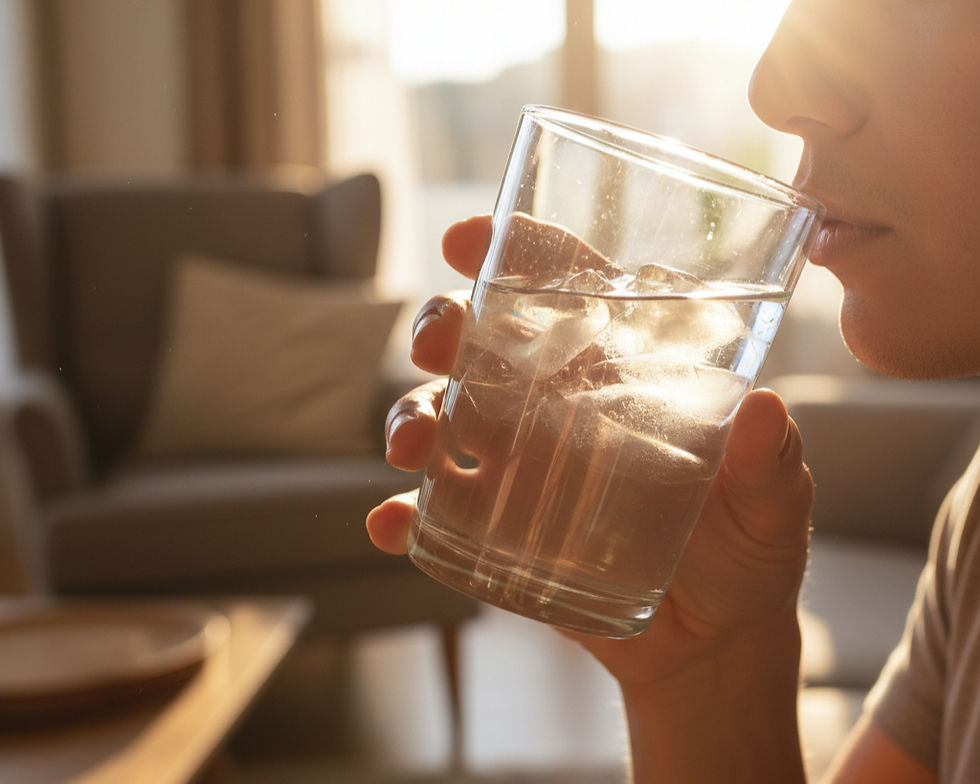
Most people think dehydration starts when they feel thirsty. In reality, your body starts responding to changes in hydration before you necessarily notice it. Those changes can affect a lot more than your mouth.
Your energy. Your concentration. Your mood. Your exercise performance. Your kidneys. Your blood pressure. And if you live with diabetes, your blood sugar too.
Let's talk about why hydration matters.
Why Does Water Matter So Much?
Your body is constantly losing water.
Every breath. Every trip to the bathroom. Every workout. Every hour spent outside in the Florida heat.
Water isn't just something we drink when we're thirsty. It's involved in nearly every process that keeps us alive. It helps regulate body temperature, supports blood circulation, carries nutrients throughout the body, helps the kidneys remove waste, and keeps our cells functioning properly.
Even mild dehydration can affect how you feel. You might notice a headache, lower energy, trouble concentrating, or feeling more irritable than usual.
Instead of reaching for another cup of coffee, it could be you're just thirsty.
Your Body Has a Built-In Water Conservation System
Here's where things get a little nerdy. Your brain is constantly monitoring how much water is available in your body. When it senses that you're starting to lose too much, it releases a hormone called vasopressin.
Think of vasopressin as your body's water conservation manager. Its job is essentially to tell your kidneys, “Hang onto every drop you can.” That's one reason your urine becomes darker and you may pee less when you're dehydrated. Your body is trying to conserve the water it has left.
Pretty amazing, right?
This system is incredibly useful when you're sweating through a hot Florida afternoon or haven't had anything to drink all day. The problem comes when your body is frequently having to turn on this water-conservation system.
Researchers are studying the relationship between chronic hydration status, vasopressin, kidney health, metabolism, cardiovascular health, and long-term disease risk. There is still plenty we don't know, but we do know that maintaining adequate hydration is an important part of keeping the body's normal systems running well.
How Do You Know If You're Dehydrated?
Your body gives you clues.
Thirst is an obvious one, but you may also notice darker yellow urine, dry mouth, headache, fatigue, irritability, trouble concentrating, or feeling less physically capable during exercise.
As dehydration becomes more significant, you may notice dizziness, a faster heart rate, much less urine, weakness, or feeling lightheaded when standing.
Severe dehydration is different. Significant dizziness, confusion, fainting, very little or no urine, rapid breathing, or inability to keep fluids down are reasons to seek medical attention.
Don't wait until you're severely dehydrated to start paying attention.
Living in Florida Makes Hydration a Little Harder
If you live in Brandon, Riverview, Valrico, or anywhere around Tampa Bay, you already know where I'm going with this.

Florida is hot.
Florida is humid.
You can lose a surprising amount of water without realizing it.
Walking the dog. Working in the yard. Playing outside with the kids. Watching a soccer game. Going for a run. Spending the afternoon at the beach. Even sitting outside for dinner in the middle of summer.
Humidity can make it harder for sweat to evaporate efficiently, which is one of the ways your body cools itself. So if you're sweating more, you're losing more water. And if you're not replacing it, dehydration can sneak up on you.
So How Much Water Do You Actually Need?
This is where things get confusing.
You've probably heard the advice to drink eight glasses of water a day. Or maybe you've heard you should drink half your body weight in ounces.
There isn't one magic number that works for every person. Your fluid needs depend on your body size, activity level, diet, environment, health conditions, and how much water you're getting from food and other beverages.
The National Academies' commonly referenced adequate intake for total water is about 3.7 liters per day for men and 2.7 liters per day for women. Importantly, those numbers include water from food and all beverages, not just plain drinking water. The amount you personally need can be higher or lower.
For a simple starting point, I like using the “half your body weight in ounces” estimate.
It's not a medical prescription. It's just an easy way to get a ballpark number.
For example:
A 160-pound adult → about 80 ounces per day
A 200-pound adult → about 100 ounces per day
Then adjust from there.
If you're exercising, sweating heavily, spending the day outside in the Florida heat, pregnant, breastfeeding, or sick with fever, vomiting, or diarrhea, your needs will increase.
And if you have heart failure, advanced kidney disease, cirrhosis, or another condition requiring fluid restriction, don't use this formula without talking with your healthcare provider. In these cases, more water isn't always better.
What About Coffee?
Good news for my fellow coffee drinkers. You don't have to give up your morning coffee in the name of hydration.
Caffeinated beverages can contribute to your overall fluid intake, and the diuretic effect of caffeine is not a reason to assume that coffee “doesn't count” as fluid.
That said, coffee doesn't have to be your hydration strategy either.
If You Take Insulin, Hydration Matters Even More
This is where hydration gets particularly interesting for people living with diabetes. Dehydration can make managing blood sugar more difficult.
When you're dehydrated, your body releases hormones that help conserve water and maintain circulation. Some of these same stress hormones can push blood sugar higher.
At the same time, dehydration can make it harder for insulin to work effectively.
Now imagine what happens when blood sugar starts climbing.
Once glucose levels rise to a certain threshold, your kidneys start getting rid of some of that extra sugar through your urine, pulling water along with it.
So now you're losing even more fluid.
Higher blood sugar → more urination → more fluid loss → dehydration → blood sugar becomes harder to manage.
It's a frustrating cycle.
This is one reason you might notice that a stubborn high blood sugar comes with an intense thirst and a whole lot of trips to the bathroom. The dehydration isn't the only thing that increases blood sugar, but it can make the situation harder to correct.
This becomes especially important during illness.
If you have diabetes and you're sick with something like the flu, vomiting, diarrhea, or even a significant infection, your body is already under stress. Blood sugar can rise even when you're eating less, and dehydration can make the situation worse.
The American Diabetes Association recommends paying close attention to fluids during illness and having a sick-day plan that includes when to check blood sugar and ketones and when to contact your healthcare team.
Hydration doesn't replace the need for insulin in the body, but staying adequately hydrated gives your body a better environment in which to do its job, and can make it easier to manage blood sugar.
Start With One Small Change
You don't need to go from a sip here and there to drinking a gallon of water tomorrow. That probably isn't going to be sustainable for most people anyway.
Instead, start with one small change that feels easy enough to actually keep doing.
Maybe tomorrow morning, you drink a small cup of water while your coffee is brewing. Maybe you keep a water bottle next to your computer. Maybe you finally buy that 40 oz insulated cup you've been eyeing because you know cold water makes you drink more, and you're actually going to fill it up every day.
Add some visual cues. Make it convenient. Make it fun.

If you’re into puppies, maybe your reward for refilling your cup is five minutes of your favorite K9 videos. If a straw makes you drink more, use a straw. If you love lemon or berries in your water, keep them stocked in the fridge.
There isn't one right way to build a hydration habit.
The important part is figuring out what works for you.
And remember the question we started with: Why do you want to drink more water?
Maybe it's more energy. Better workouts. Fewer headaches. Supporting your kidney health. Managing your blood sugar. Or maybe you simply want to feel better during your day.
That reason matters.
When your goal is connected to something you actually care about, you're much more likely to stick with it.
Hydration isn't about chasing a perfect number on a giant water bottle. It's about giving your body the water it needs to do what it already knows how to do, so you can feel and function at your best.
So don't worry about changing everything tomorrow.
Start with one small action, then let that small change become a habit.
Author's Note
This story was written by me, Katlyn Agosta, MSN, APRN, FNP-C, CDCES, nurse practitioner, certified diabetes care and education specialist, and proud Valrico local. I started Papaya Primary Care to make healthcare more personal, accessible, and prevention focused again. My specialty is diabetes care, education, and empowerment from the lens of my own type 1 diabetes experiences.

Comments